Indoor Air Quality · Home Guide
Evaluating Austin Air Standalone Units for Everyday Home Use
A room air purifier can be a straightforward way to focus on the spaces where you spend the most time. Before choosing an Austin Air unit, look beyond the name on the cabinet: consider room size, placement, airflow, noise, filter upkeep and how you plan to use it day to day.
Standalone air purifiers work independently of a home’s central heating and cooling system. That makes them an appealing option for renters, households without central HVAC, or anyone who wants to address air in a particular bedroom, living room or home office. They can also supplement a central system, though they do not replace routine HVAC maintenance, source control or ventilation.
Austin Air offers several freestanding models designed around its own filter and cabinet configurations. Evaluating one for everyday home use means matching the specific unit to the room and the concerns you want to address—not assuming that every purifier, or every filter, performs the same way. A little planning before purchase can help avoid the familiar disappointment of a unit that blocks a walkway, runs louder than expected or is used in a space that is too large for its capacity.
In brief: Identify the room and the pollutants you’re concerned about, verify the model’s specifications, choose a practical location, and understand the filter’s replacement and care instructions before bringing a unit home.
What a standalone unit can—and cannot—do
A portable purifier draws room air through a filter and sends treated air back into the space. Many models combine particle filtration with other media intended to capture or adsorb certain gases and odors. The exact design and performance depend on the model and its installed filter, so it is worth reading the product documentation rather than relying on a general label such as “air purifier.”
Particle filters can help reduce airborne particles that pass through the device, including some dust, pollen and smoke particles. Activated carbon and related media may be included to address selected gases or odors, but performance varies with the type and amount of media, the contaminant, airflow and operating conditions. No room unit removes every pollutant, and a purifier should not be treated as a substitute for fixing the source of an indoor air problem.
For example, if cooking produces lingering odors, using an exhaust fan and improving kitchen ventilation may be important alongside filtration. If a room has a persistent damp or musty smell, investigate moisture and possible mold growth rather than expecting an air cleaner to solve the underlying issue. For outdoor smoke, keeping windows closed when appropriate and following local public health guidance may also matter.
A standalone unit is best understood as one part of an indoor air quality plan. Source control, ventilation and filtration each have a role, and the right balance depends on the building, the activity in the room and the concern at hand.
Start with the room, not the product name
Before comparing models, take a moment to describe the room where the purifier will operate. Measure its approximate length and width, note the ceiling height if it is unusually high, and consider whether the space is open to adjoining rooms. A purifier selected for a compact bedroom may be a poor match for a large, open living area—even if both rooms appear on a product’s coverage chart.
Check the manufacturer’s stated room coverage and the conditions behind it. Coverage figures can be based on different assumptions, including how frequently the air is circulated through the unit. Look for airflow or clean-air delivery information where provided, and compare specifications consistently. A headline square-foot figure alone does not tell the whole story about how effectively a unit will serve your room at the speed you are willing to run it.
It helps to ask yourself a practical question: will the unit run on a higher setting, or will household noise make a lower setting more realistic? If you expect to keep it on a quieter speed in a bedroom, choose a model whose performance at that setting seems suitable for the space. A generous coverage claim may be less meaningful if the everyday operating level is too low for the room.
- Room dimensions: Estimate the space the unit must serve, including connected areas if doors are usually open.
- Ceiling height: A tall or vaulted room contains more air than a typical room with the same floor area.
- Use patterns: A bedroom occupied overnight may call for a different operating schedule from a shared living space.
- Air movement: Furniture, partitions and open doorways can affect how air circulates around the room.
- Noise tolerance: Consider the settings you can realistically live with, especially during sleep or work.
When a room is especially large or has several connected zones, a single portable purifier may not distribute filtered air evenly throughout the entire area. It may make more sense to focus on the room where people spend the most time, or to ask a qualified HVAC or indoor air quality professional about a broader approach.
Compare the filter system carefully
“HEPA” is often used as shorthand for particle filtration, but the details matter. Look for the exact filtration claims in the documentation for the model and replacement filter you are considering. A marketing description may refer to a particular test, a named filter stage or a media specification; those terms are not interchangeable in every context. If a claim is important to your decision, look for a clear explanation of how it was measured and under what conditions.
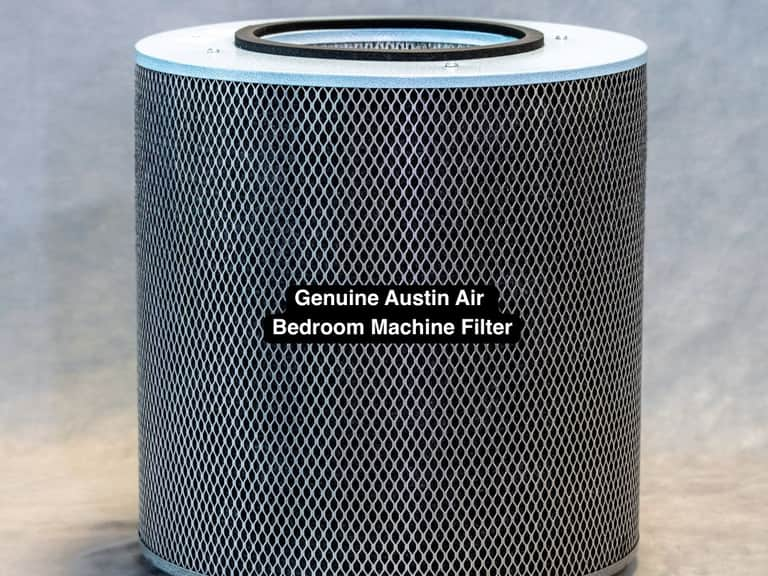
Some Austin Air replacement filters are described as multi-stage systems. For example, the Austin Air Bedroom Machine Filter is listed with five-stage filtration, including true medical-grade HEPA, activated carbon and mineral-based filtration, as well as HEGA carbon cloth. Its product information describes a 60-square-foot filtration area and a filter life of five years under normal use. Those are product-specific details, not a guarantee that every Austin Air model uses the same filter or that replacement intervals will be identical in every home.
When reviewing a filter, check that it is designed for the exact unit you own or plan to buy. Confirm its dimensions or model compatibility, the replacement procedure, and whether the manufacturer gives a lifespan estimate or maintenance schedule. A replacement filter that fits one machine may not fit another, even within the same product family.
It is also useful to separate particle concerns from gas and odor concerns. HEPA-style filtration is associated with particles; activated carbon and other sorbent media are intended for certain gases and odors. A device’s overall usefulness depends on more than the presence of a particular material: the amount of media, air passing through it and the substance being addressed all play a role. Be cautious about broad claims that suggest one filter solves every indoor air issue.
Placement: give the purifier room to work
Once you have chosen a model, its location can influence how conveniently and effectively it operates. Follow the manufacturer’s placement instructions first. Many standalone units draw air through one or more intake areas and release it elsewhere, so crowding the cabinet with furniture, curtains or stored belongings can interfere with circulation.
Think about the unit’s intake and outlet rather than simply tucking it into the nearest corner. Leave the clearances recommended in the manual, keep vents unobstructed and avoid placing the machine where household items are likely to cover it. A central or open position can support circulation, but the best location depends on the room layout and the model’s airflow design.
Convenience matters, too. Put the purifier somewhere that does not narrow a walkway, create a trip hazard or interfere with doors and drawers. If the unit has a cord, route it safely. Keep it on a stable, level surface and consider the distance to an outlet before settling on a permanent position. In homes with children or pets, take extra care with cords and with access to controls.
A bedroom setup should account for both airflow and comfort. Place the unit where it can circulate air without directing an uncomfortable stream toward the bed, if that is a concern, and check the noise level at the settings you plan to use. A purifier that is easy to operate at night is more likely to become part of a consistent routine.
- Keep intake and outlet areas clear according to the manual.
- Avoid positioning the unit behind curtains or tightly between large pieces of furniture.
- Choose a location with stable footing and a safely routed power cord.
- Leave enough access to inspect controls and carry out routine maintenance.
- Recheck placement if the room layout changes or the unit seems to have restricted airflow.
Everyday operation: sound, settings and electricity
Air purifiers are most useful when people can operate them consistently, so think beyond maximum performance. Read the manual for available speeds, control features and recommended usage. If the device offers multiple settings, try them at different times of day and notice how sound, airflow and comfort change. The highest setting may be helpful in some circumstances, but it may not be the one you choose for a quiet evening or a full night’s sleep.
Noise is personal. A low hum that disappears into the background for one person can be distracting to another, especially in a quiet bedroom or home office. If possible, review reliable sound information or listen to the unit in operation before committing. Be wary of treating a single decibel figure as a complete prediction of comfort: pitch, room acoustics and listening distance can all affect how sound feels.
Electricity use is another ongoing consideration. Check whether the manufacturer provides power consumption by setting, and consider how many hours per day the purifier is likely to run. A device that remains on for long periods may contribute more to household electricity use than one operated intermittently. Actual cost depends on the model, setting, usage and local electricity rates. Use the manufacturer’s figures and your utility rate for a more useful estimate rather than assuming all standalone units consume the same amount.
Make sure operating controls fit your household. A simple switch may be ideal for some users, while others may prefer a timer or other features if available on the particular model. Verify what the model actually includes; do not assume features are standard across a brand’s range.
Filter upkeep and realistic ownership costs
Filter maintenance is part of owning a standalone purifier, not an occasional afterthought. Start by reading the instructions for the exact model. Some units may have a cleaning step or exterior care guidance; replacement filter handling and intervals vary. Do not wash or vacuum filter media unless the manufacturer explicitly says that it is safe. Improper cleaning can damage the filter or affect its performance.
Replacement timing may depend on the filter design, household conditions and how heavily the unit is used. Dusty surroundings, smoke events, pets or frequent operation may affect how quickly a filter loads. Use the manufacturer’s schedule and indicators, if the model has them, as the primary guide. A stated lifespan such as “five years under normal use” should be understood as a product estimate under stated conditions—not a promise that every household can wait that long regardless of use.
Before buying, look up the correct replacement filter and its current price. This simple step makes the long-term cost easier to judge. Consider the purchase price of the unit, replacement media, electricity use and any routine care. A purifier that appears affordable upfront can have a different ownership profile once filter costs are included.
Keep a note of the installation date and the manufacturer’s recommended service interval. That can be as simple as writing the date on a household maintenance calendar. If the unit’s airflow changes noticeably, an unusual odor develops or a warning light appears, consult the manual. Do not dismantle the cabinet or bypass safety features unless the instructions specifically direct you to do so.
A practical checklist before choosing a model
Comparing product pages can quickly turn into a maze of technical language. A short checklist keeps the decision grounded in what your household actually needs:
- Name the concern. Are you focusing on airborne particles, smoke, selected odors, or a combination? Identify what filtration media the model uses and what its claims cover.
- Measure the intended room. Compare the dimensions and air volume with the manufacturer’s stated coverage and airflow information.
- Check the operating level you will use. Consider noise and whether the setting that feels comfortable can still serve the room appropriately.
- Plan the location. Confirm that the unit can sit safely with the required space around its intake and outlet.
- Verify filter compatibility. Identify the exact replacement filter and confirm it matches the specific model.
- Budget for upkeep. Include likely filter costs, energy use and any maintenance tasks described in the manual.
- Read the limitations. Understand what the purifier is designed to address and what requires ventilation, cleaning or professional attention.
This approach can also make comparisons between brands more meaningful. Instead of focusing on broad promises, compare relevant specifications, the evidence behind the claims, replacement costs and the practical experience of using the device in your home.
Common missteps to avoid
One common mistake is choosing by room coverage alone. A number on a box cannot account for every home layout or tell you how a device performs at every fan speed. Review the assumptions behind the figure and choose with your likely operating habits in mind.
Another is placing the unit where it is visually unobtrusive but functionally boxed in. A purifier hidden behind a sofa may be convenient for the room’s appearance, yet blocked airflow can undermine its usefulness. Follow the clearance guidance and choose a spot that is easy to access.
It is also easy to forget the replacement filter until the unit needs one. Confirm availability and cost in advance, and keep the model information somewhere handy. Finally, avoid expecting an air purifier to correct the source of a problem. Persistent smoke, strong chemical odors, moisture or symptoms that concern you call for appropriate investigation and, when needed, professional or medical advice.
What a good fit looks like at home
The right standalone unit is not necessarily the biggest or most feature-packed option. It is the one that suits the actual room, the household’s air quality priorities and the way people live. That means a manageable location, airflow that fits the space, noise that does not discourage use, and a clear plan for filter care.
For Austin Air models, make the evaluation specific: compare the exact machine and its compatible filter, check the manufacturer’s instructions, and treat stated coverage and filter-life details as model-dependent. If you are considering the Bedroom Machine, its replacement filter information can be reviewed on the Bedroom Machine Filter product page, including the stated filtration stages and normal-use lifespan. Confirm that the filter is appropriate for your intended unit and household before purchasing.
And remember the bigger picture. A portable purifier can be a useful tool for room-specific filtration, but clean indoor air also depends on the sources in the home, ventilation and sensible maintenance. A thoughtful setup—chosen for the room and used as directed—offers a more realistic path to everyday air quality support than any single product promise.
Frequently asked questions
Can a standalone purifier serve more than one room?
A portable unit mainly treats air that circulates through it. Open doors and connected spaces can affect circulation, but a purifier should not be assumed to clean an entire home. Check the model’s coverage guidance and focus on the room where filtration is most needed.
Where should I place an Austin Air unit?
Follow the instructions for the specific model and keep its air intake and outlet unobstructed. Choose a stable location with safe cord routing and enough space for access and maintenance.
How often should I replace the filter?
Use the replacement schedule and guidance provided for the exact unit and filter. Lifespan can vary with operating conditions and household use, so a general estimate should not replace the manufacturer’s instructions.
Does a HEPA filter remove gases and odors?
HEPA-style media targets airborne particles. Some purifiers also include activated carbon or other media intended for selected gases and odors. Check the model’s specifications and claims; no single filter should be assumed to address every indoor pollutant.